
Topicals
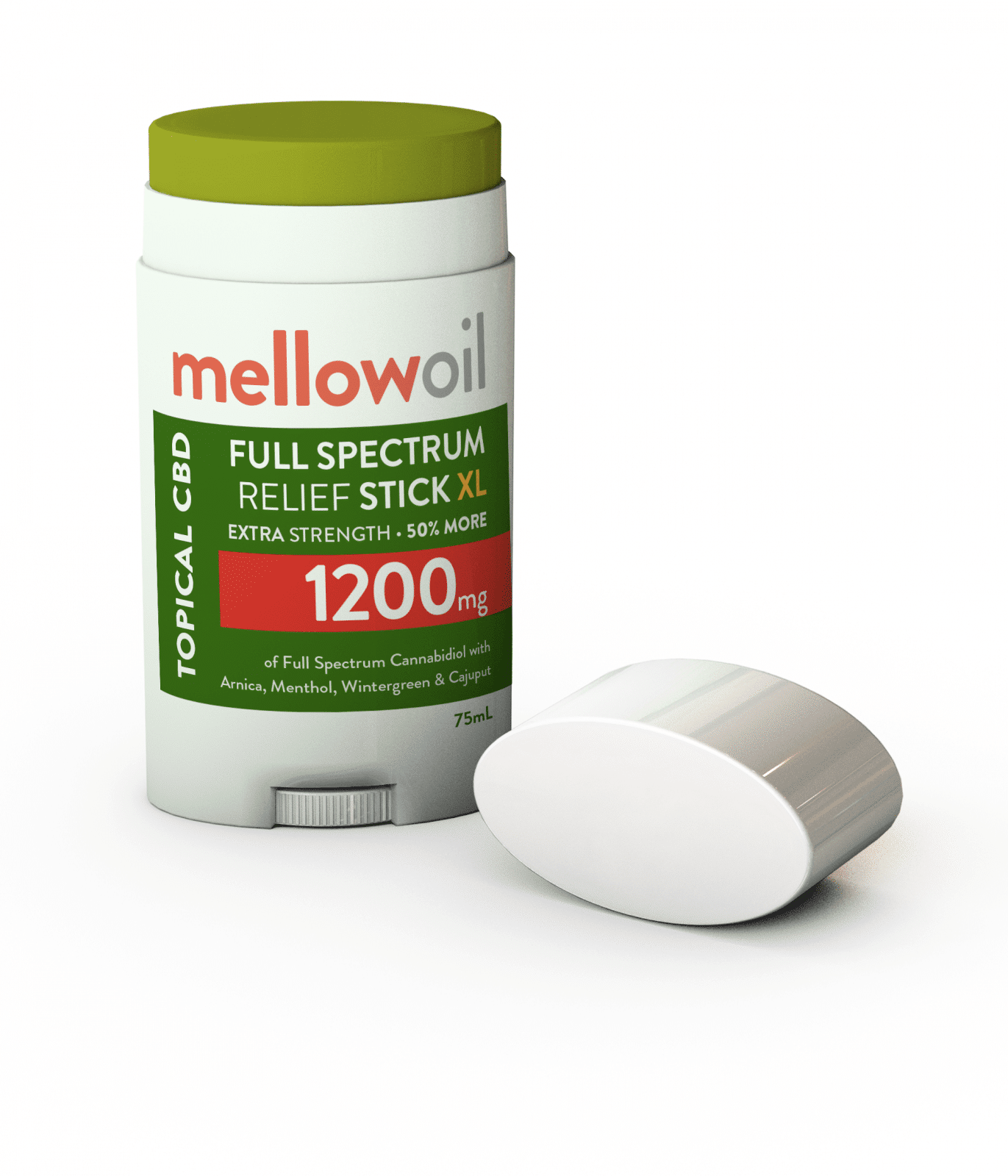
Mellow Oil Topical Full Spectrum EXTRA Strength XL (extra large) CBD Relief Stick 75mL with 1200mg CBD
★★★★★110
$80.00 CAD
CBD isolate powder is heat-stable and fat-soluble — the two properties that make it the most versatile cannabinoid format. Recipes, DIY tinctures, balms, gummies, and more.
Of all the ways to take CBD, isolate powder is the one most people underestimate. It looks unremarkable — a fine white crystalline powder, odourless and flavourless, that barely registers in your palm. But those same qualities make it the most adaptable cannabinoid format we carry. If you want to buy CBD isolate in Canada, Mellow's 99%+ purity isolate is CO2-extracted and third-party lab tested.
Two physical properties explain everything:
Those two properties, combined with zero flavour interference, open up a range of practical applications that go well beyond a dropper under the tongue. Here's what you can do with it.
The most direct application — and usually the most economical. CBD isolate dissolves completely in any carrier oil, letting you make a custom-concentration tincture at home.
What you need:
Concentration guide:
| Isolate | Carrier Oil | Concentration |
|---|---|---|
| 500mg | 30mL | ~16mg per mL |
| 1000mg | 30mL | ~33mg per mL |
| 2000mg | 30mL | ~66mg per mL |
| 3000mg | 30mL | ~100mg per mL |
Method: Gently warm your carrier oil to around 60°C — warm to the touch but nowhere near simmering. Add the measured isolate and stir for two to three minutes until the solution runs completely clear. Pour into a dropper bottle. Let it cool before capping.
MCT oil is the most popular base: neutral taste, fast absorption, stays liquid at room temperature. Hemp seed oil adds omega fatty acids and a mild nutty flavour. Olive oil works but will solidify in the fridge.
Making an infused fat first is the smartest approach for baking — it becomes a drop-in replacement in any recipe that calls for butter or oil.
CBD Butter: Melt 225g of unsalted butter over low heat. Add your measured isolate and stir until the solution runs clear. Pour into a container and refrigerate to set. Use exactly as you would regular butter — in cookies, brownies, on toast, or in any savoury dish.
CBD Coconut Oil: Gently warm the coconut oil until liquid (it turns clear around 24°C). Add isolate, stir until fully incorporated, and let it set. Works in any recipe that calls for coconut oil.
Calculating dose per serving: If you dissolve 1000mg isolate into 225g of butter, and your cookie recipe uses 113g of that butter to make 24 cookies, each cookie contains approximately 22mg of CBD. Adjust the isolate amount up or down based on your target dose per piece.
No taste, no smell, heat-stable — isolate integrates into baked goods without any trace. The method is always the same: add it to the melted fat component.
CBD Cookies
Use your favourite shortbread, sugar cookie, or chocolate chip recipe. Melt the butter, stir in the measured isolate until dissolved, then proceed exactly as written. The CBD bonds to the butter and distributes evenly through every cookie.
CBD Brownies
Brownies are ideal because they call for a high ratio of butter or oil, and the dense texture creates consistent portions. Add the isolate to the melted butter or chocolate before combining with other ingredients. Bake at your usual temperature — 175°C (350°F) works well.
CBD Oatmeal Bars & Energy Balls
Any recipe that uses nut butter, coconut oil, or a fat-based binder is a straightforward target. Stir isolate into the fat or nut butter before combining with dry ingredients. Cut or portion consistently — CBD distributes through the fat, so evenly-mixed batches produce consistent per-serving doses.
Making your own CBD gummies is easier than most people expect — about 20 minutes of active time and a silicone gummy mould.
Basic recipe (~40–50 small gummies):
Method:
The coconut oil does two things: it improves CBD absorption through the fat-solubility mechanism, and it gives the gummies a softer, less rubbery texture. You can use any fruit juice — the isolate adds zero taste of its own.
Isolate dissolves directly into the beeswax and oils that form any topical balm, making a DIY CBD topical one of the most satisfying projects you can take on.
Simple CBD Balm:
Method:
This produces a firm balm that melts on contact with skin. It absorbs transdermally and can be applied directly to any area. Shelf life is 6–12 months away from direct sunlight.
CBD doesn't dissolve in plain water — it'll clump or float. But it works well in drinks that contain fat:
The rule of thumb: if the drink contains fat, isolate will dissolve and absorb properly. Plain water or juice alone won't carry it.
Try the Mellow CBD Dosage Calculator → — enter your weight and goal and get a recommended starting dose in seconds. Once you have your target mg, come back to the concentration guide above to work out how much isolate you need per batch.
A standard kitchen scale isn't accurate enough for small isolate quantities. You need a digital scale that reads to at least 0.1g (100mg) — ideally 0.01g (10mg). These are inexpensive to find (jewellery or powder scales, $15–30).
For very small per-serving amounts (under 50mg), the most practical method is to pre-dissolve a larger batch into oil first and dose from that — measuring one teaspoon of a known-concentration infused oil is far more reliable than trying to weigh out 0.03g of powder directly.
All of the following are available as pure crystalline powder — 99%+ purity, CO2 extracted, ready to use in any application above. Use them individually or combine to build a custom multi-cannabinoid formulation.
CBD Isolate (Cannabidiol) The starting point for most people. Pure CBD, zero THC, zero taste, zero odour. The most versatile isolate for daily wellness, DIY tinctures, edibles, and topicals.
CBG Isolate (Cannabigerol) Known as the "mother cannabinoid" — CBG is the biosynthetic precursor from which the plant produces other cannabinoids including CBD and THC. It carries a distinct profile, with research pointing toward focus, mood, and inflammation. Behaves identically to CBD isolate in any recipe or formulation.
CBN Isolate (Cannabinol) Most closely associated with sleep and relaxation support. CBN occurs naturally as THC oxidizes over time, but ours is produced directly without THC involvement. Excellent in evening applications — a nighttime tincture, a before-bed gummy recipe, or a relaxing balm.
CBC Isolate (Cannabichromene) One of the less-discussed minor cannabinoids, with emerging research around mood and neurological support. Like all isolates: flavourless, fat-soluble, heat-stable. Use it exactly as you would CBD isolate, or blend it with CBD for a broader cannabinoid profile.
CBDA Isolate (Cannabidiolic Acid) The raw, acidic precursor to CBD — present in the fresh hemp plant before decarboxylation. CBDA is increasingly studied for its own distinct properties, separate from those of CBD. Available for those building full-spectrum raw formulations.
CBGA Isolate (Cannabigerolic Acid) The acidic form of CBG, and technically the biosynthetic origin point of all cannabinoids in the hemp plant. Available for formulations where raw, non-decarboxylated cannabinoids are specifically desired.
Browse all isolates and extracts →
Recipes and suggested uses are for general wellness and DIY purposes. Isolate powder is potent — start with a lower dose than you think you need and adjust from there.
The information in this article is for educational purposes only and is not intended as medical advice. Always consult with a healthcare professional before starting any new supplement, including CBD products.
Sources & Further Reading
Topicals
Topicals

Topicals
Weight-based CBD dosing chart for Canadians. Find your starting dose in mg based on body weight, use case, and product type — plus a free calculator to personalize it further.
CBD isn't a weight loss drug — but there's real science behind how it may support better sleep, lower stress, and a healthier metabolism. An honest look at the evidence.

CBD quiets a racing mind; CBN promotes physical drowsiness. Together, they offer a non-habit-forming natural sleep approach. Here's how they work, how to dose them, and what to look for in a product.