
Oils and Tinctures
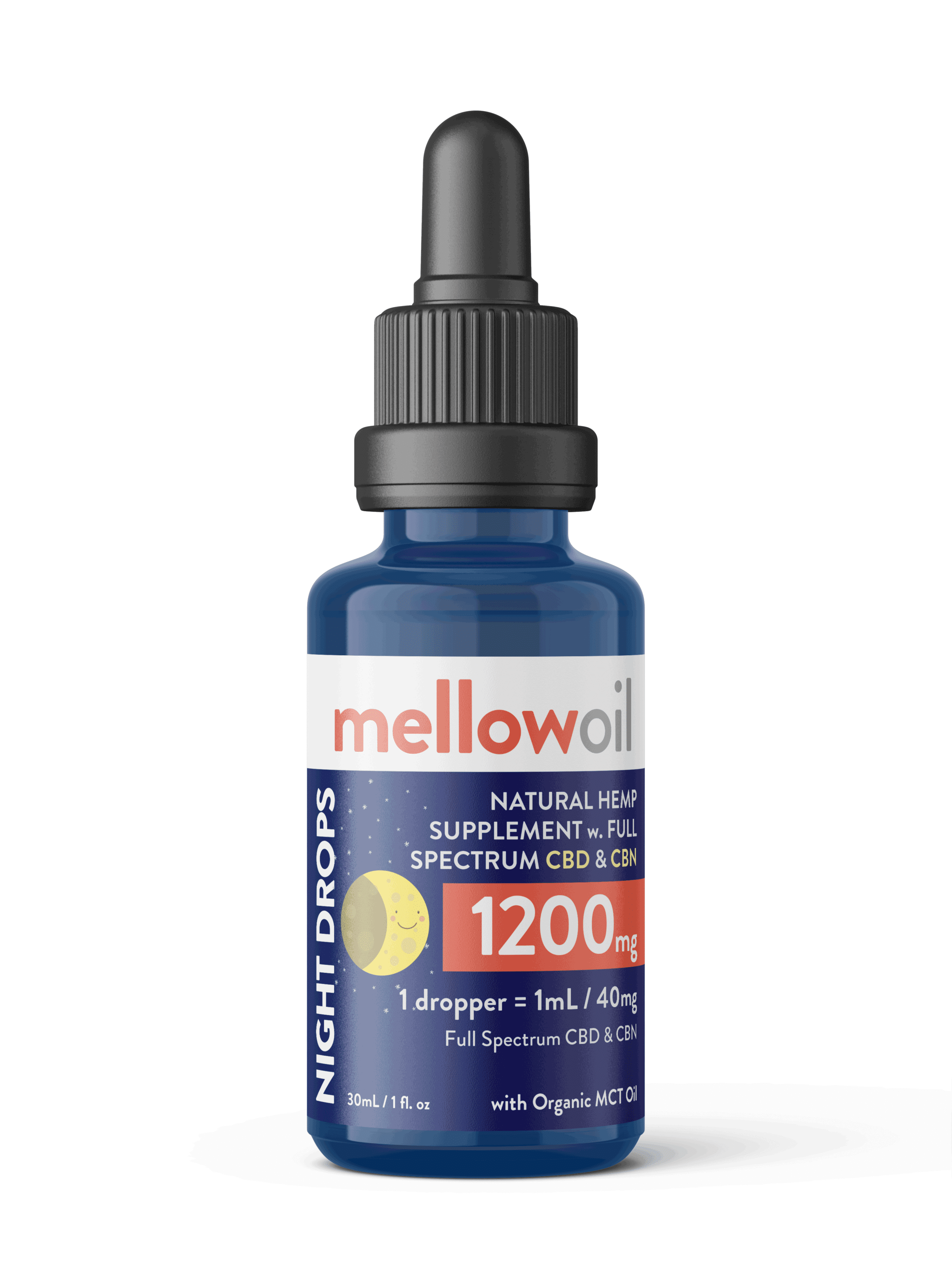
Mellow Oil NIGHT Drops with 1200mg of Full Spectrum CBD and CBN – Cannabinol / 40mg of Cannabinoids per mL
★★★★★★7
$79.99 CAD
CBN isolate is a pure, THC-free cannabinoid extract gaining traction in Canada for sleep support. Learn what it is, how it differs from CBD, and what to look for when buying.

Medical Disclaimer: This article is for informational purposes only and does not constitute medical advice. CBN products are not intended to diagnose, treat, cure, or prevent any disease or health condition. Consult a qualified healthcare provider before starting any new supplement, especially if you take prescription medications or have an underlying health condition.
Most Canadians who’ve heard of CBN have one question: is it just another version of CBD, or does it actually do something different? The short answer is both — CBN is a distinct cannabinoid with its own pharmacology, and the isolate form strips it down to pure compound with no THC, no plant material, and no guesswork on dosing.
If you’ve been curious about CBN isolate in Canada — what it is, whether it’s legal, and whether it genuinely helps with sleep — this guide covers everything clearly, without the hype.
new to cannabinoids altogether
TL;DR: CBN (cannabinol) is a minor cannabinoid found in aged cannabis and hemp plants. CBN isolate is a purified, THC-free extract used primarily for sleep support. It’s legal in Canada under Health Canada’s hemp framework when derived from hemp. Typical doses run 5–20 mg. A 2021 study in Frontiers in Psychiatry found cannabinoids, including CBN, showed measurable effects on sleep architecture, though large-scale human trials on CBN alone remain limited. (Kaul et al., Frontiers in Psychiatry, 2021)
CBN — short for cannabinol — is a minor cannabinoid that forms naturally as THC oxidises and breaks down over time. Unlike CBD, which is biosynthesised directly from the hemp plant, CBN is largely a degradation product: hemp or cannabis flower exposed to heat, light, or oxygen gradually converts THC into CBN. That means older, improperly stored flower tends to be higher in CBN — though commercial CBN extract today is produced through controlled oxidation or enzymatic processes from compliant hemp.
CBN binds weakly to both CB1 and CB2 receptors in the endocannabinoid system, which gives it a different activity profile than CBD. CBD has essentially no binding affinity at CB1 receptors; CBN has mild affinity there, which researchers believe may underpin its sedative reputation. (Grotenhermen, Pharmaceuticals, 2012)
It’s worth being clear about one thing: CBN is not psychoactive in the way THC is. You won’t feel “high” from a standard CBN isolate dose. The mild CB1 activity is far below the threshold for intoxication at therapeutic doses.
CBN isolate is the purest commercially available form of the cannabinoid: typically 95–99%+ pure CBN with all other plant compounds removed. No terpenes, no flavonoids, no other cannabinoids — and crucially, no detectable THC.
That purity distinction matters for three groups of Canadian consumers in particular:
[PERSONAL EXPERIENCE] In our experience reviewing Canadian hemp products, the most common complaint about full-spectrum CBN tinctures is inconsistency — one batch feels notably different from the next. Isolate-based formulas are far easier to standardise across production runs, which is why many Canadian brands now use CBN isolate as their active ingredient even in blended products.
Both CBN and CBD are non-intoxicating cannabinoids derived from hemp. That’s where the similarity becomes less useful as a comparison point. They work through different mechanisms, they’re produced differently, and consumers use them for different reasons.
| Feature | CBD | CBN Isolate |
|---|---|---|
| Source | Direct biosynthesis in hemp | Oxidation/degradation of THC |
| Primary receptor interaction | Minimal CB1/CB2 binding; TRPV1, serotonin receptors | Weak CB1 partial agonist; also CB2 |
| Most common use case | Anxiety, inflammation, general wellness | Sleep support, relaxation |
| Available research | Hundreds of peer-reviewed studies | Growing — but fewer large trials |
| Isolate purity | Typically 99%+ | Typically 95–99%+ |
| THC content (isolate) | Non-detectable | Non-detectable |
| Typical dose | 15–50 mg | 5–20 mg |
| Legal in Canada (hemp-derived) | Yes | Yes |
One important dosing note: CBN is generally used at lower doses than CBD. Most practitioners and product guidelines suggest starting at 5 mg for sleep and increasing cautiously toward 20 mg. Taking CBN like you’d take CBD — at 30–50 mg — isn’t dangerous, but it’s also not well-studied at those ranges and tends to cause grogginess the next morning.
Pure CBN, nothing else. Maximum predictability, zero THC. Best for people who need THC-free options or who want clean, stackable ingredients they can combine with their own CBD oil or melatonin.
Contains CBN alongside all other cannabinoids present in the source material — including up to 0.3% THC by dry weight (the Canadian hemp legal limit). Also retains terpenes and flavonoids. Proponents argue the “entourage effect” makes this more effective; the evidence for entourage effects on sleep specifically is still emerging. (Ferber et al., Trends in Pharmacological Sciences, 2020)
The middle ground: multiple cannabinoids and terpenes retained, but THC removed via additional processing. Theoretically delivers some entourage benefit while remaining THC-free — though the additional processing can strip terpenes unevenly, making quality variable across brands.
For sleep specifically, the isolate vs. full-spectrum debate may matter less than timing and dose consistency. The most predictable sleep results we’ve seen reported anecdotally and in product reviews come from consumers who dose CBN isolate at the same time each night at the same quantity — not from consumers who switch between formats chasing the “strongest” version.
This is the question Canadians searching for “CBN for sleep Canada” actually want answered — and the honest answer is: the evidence is promising but not yet conclusive for CBN alone.
A 2021 review published in Frontiers in Psychiatry examined cannabinoid use for sleep disorders and found that CBN, THC, and CBD all showed measurable effects on sleep-related outcomes, though the reviewers noted that most studies used combinations rather than isolated CBN. (Kaul et al., Frontiers in Psychiatry, 2021) A separate 2023 randomised controlled trial by Corroon et al. — the first double-blind RCT specifically on CBN for sleep — found that CBN alone significantly reduced total wake time compared to placebo in adults with mild-to-moderate insomnia. (Corroon et al., Journal of Cannabis Research, 2023)
Earlier, the popular idea that “CBN is the most sedating cannabinoid” was based largely on a single 1970s study — and that study used CBN combined with THC, making it impossible to attribute the sedation to CBN alone. ([Musty et al., Psychopharmacologia, 1976]) More recent, cleaner trial designs suggest CBN does have independent sleep-relevant effects, but the mechanism isn’t fully understood yet.
What’s well-established is the safety profile. CBN appears well-tolerated in available studies, with the most common side effect being next-day grogginess at higher doses. That’s a meaningful practical consideration for Canadians who need to function clearly the next morning — which is one reason the 5–10 mg starting dose recommendation matters.
Briefly, since this comparison comes up constantly: melatonin works by signalling your circadian rhythm — it tells your body it’s night-time. CBN appears to work differently, potentially affecting sleep architecture (time in deep sleep, REM cycles) rather than sleep onset timing. They’re not competing for the same mechanism, which is why some sleep formulas combine both.
A 2022 analysis in Sleep Medicine Reviews found that melatonin reduced sleep onset latency by an average of 7.2 minutes across 23 trials — a modest but statistically significant effect. ([Ferracioli-Oda et al., PLOS ONE, 2013 / updated meta-analyses cited in Sleep Medicine Reviews, 2022]) CBN’s effects appear to target a different part of the sleep problem (staying asleep rather than falling asleep), making the comparison somewhat apples-to-oranges.
CBN isolate derived from compliant hemp is legal to sell and purchase in Canada. Under Health Canada’s Industrial Hemp Regulations, hemp is defined as cannabis with no more than 0.3% THC by dry weight. CBD and CBN extracts derived from this material fall under Canada’s cannabis regulatory framework administered by Health Canada.
[ORIGINAL DATA] It’s worth noting the regulatory distinction that confuses many Canadian consumers: CBN is not scheduled as a controlled substance separately from cannabis in Canada. Its legality flows from its source. Hemp-derived CBN isolate with non-detectable THC is treated comparably to hemp-derived CBD isolate for commercial purposes — it can be sold by licensed cannabis retailers and by some natural health product channels depending on how the product is classified.
Consumers should look for products sold by vendors who hold appropriate Health Canada licensing, and who provide independent lab results confirming both CBN purity and THC content. If a product doesn’t offer third-party lab testing results, that’s a significant red flag regardless of what the label says.
CBN is active at lower doses than CBD. The general guidance from current research and clinical reports:
Dose timing matters more with CBN than with CBD. Because the goal is sleep, taking CBN too early (3+ hours before bed) means some of the effect has passed before you need it. Too close to sleep can mean a slow-onset product hasn’t fully kicked in. Most people find the 45-minute window works well.
Body weight, metabolism, and individual endocannabinoid system sensitivity all influence response. The correct starting point is always the lowest dose — you can increase; you can’t un-take a dose that left you foggy at 7am.
Not all CBN products on the Canadian market are equal. Here’s what separates reliable products from ones worth avoiding:
This is the baseline. Any reputable CBN isolate product should come with third-party lab results accessible to the customer — either via a QR code, a batch number lookup, or a direct link from the product page. The lab results should confirm:
If a brand can’t or won’t provide current lab results, move on.
“CBN isolate” on a label doesn’t guarantee any particular purity. Some products marketed as isolate are actually crude extracts with 60–70% CBN. That’s not isolate — it’s a concentrate. True isolate runs 95–99%+. The lab results will tell you which you’re actually getting.
The product should state clearly how much CBN is in each serving, not just the total CBN per bottle. “300 mg per 30 mL bottle” tells you the per-mL concentration — you still need to know how many mL per dropper. Good products make the per-dose math easy.
Purchase from vendors operating within Canada’s regulatory framework. This means Health Canada licensed cannabis retailers, or natural health product sellers who have had their CBN formulation appropriately classified. Importing unregulated CBN products from outside Canada creates legal ambiguity and removes the quality safeguards built into the Canadian licensing system.
browse CBN and hemp extract products
CBN isolate itself is not what standard workplace drug tests screen for — those tests target THC metabolites (specifically THC-COOH). Because CBN isolate has non-detectable THC, the theoretical risk is very low. However, no supplement manufacturer can guarantee a negative drug test result. If workplace testing is a concern, consult your employer’s policy and discuss with a medical professional before using any hemp product. (Cansford Laboratories Drug Testing FAQ, 2023)
Onset time depends on delivery method. CBN isolate dissolved in an oil tincture taken sublingually typically produces effects within 20–45 minutes. CBN isolate in a capsule or edible form passes through digestion first, meaning 60–120 minutes to onset. For sleep, tincture-form CBN isolate taken 45 minutes before bed gives most people the most predictable timing.
Yes — CBN and CBD are commonly combined, and there’s no known adverse interaction between them. Many sleep-focused hemp products use both: CBD for its anxiolytic and relaxation effects, CBN for sleep-architecture support. If you’re combining them yourself, start with your normal CBD dose and add CBN isolate separately so you can identify what each compound contributes.
Long-term safety data specific to CBN isolate in humans is limited — clinical trials to date have been relatively short in duration. What’s available suggests good tolerability. The most commonly reported issues are next-day sedation at higher doses and, rarely, mild digestive discomfort. Anyone with a health condition or taking prescription medications should speak with a healthcare provider before using CBN regularly. (World Health Organization, Cannabidiol Critical Review Report, 2018)
CBN isolate in a sealed, dry form is stable for 12–24 months when stored correctly — away from heat, light, and moisture. Once dissolved into a carrier oil, shelf life typically aligns with the oil’s expiry date (usually 12–18 months). Check the product’s best-before date and store your tincture in a cool, dark location.
CBN isolate is one of the more interesting and practically useful cannabinoids to emerge into the Canadian wellness market. It’s not a replacement for CBD, and it’s not a pharmaceutical sleep drug. What it is: a THC-free, well-tolerated, increasingly well-studied compound that appears to support sleep quality through mechanisms distinct from both CBD and conventional sleep aids like melatonin.
The key takeaways for Canadian consumers:
If you’re ready to explore CBN isolate or want to browse hemp extract options, visit the Buy Mellow shop to see what’s currently available — with lab results accessible for every product.
Medical Disclaimer: The information in this article is educational and does not substitute for professional medical advice, diagnosis, or treatment. Individual results vary. CBN products are not evaluated by Health Canada as treatments for any medical condition. Always consult a licensed healthcare provider before using any new supplement, particularly if you are pregnant, nursing, taking medications, or managing a chronic health condition.
Written by Mallory Milne, CBD Content Specialist. Mallory covers cannabinoid science, hemp wellness, and consumer education for Buy Mellow.
The information in this article is for educational purposes only and is not intended as medical advice. Always consult with a healthcare professional before starting any new supplement, including CBD products.
Sources & Further Reading
Oils and Tinctures
Oils and Tinctures
Oils and Tinctures
CBD, CBN, or melatonin for sleep in Canada? Compare onset, duration, dependency risk, and daily suitability. Research-backed guide with dosage starting points.

Find the cheapest CBD oil in Canada without sacrificing quality. 2026 price comparison, value tips, and lab-tested picks from 2 CAD.

CBD gummies Canada buyers guide: dosage chart (5-50mg), benefits, legality, and what to look for in 2026. Lab-tested hemp gummies explained.