
Oils and Tinctures
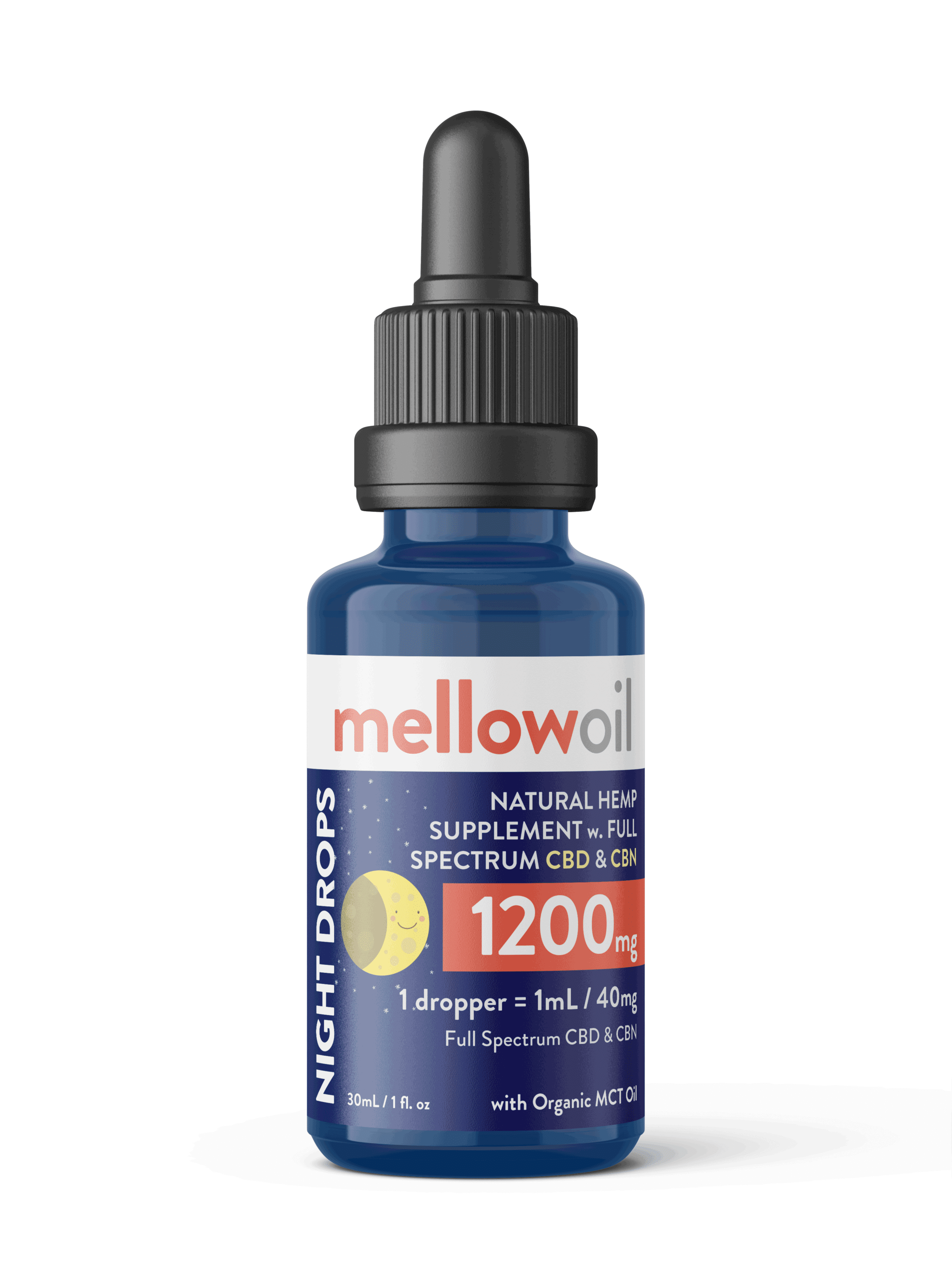
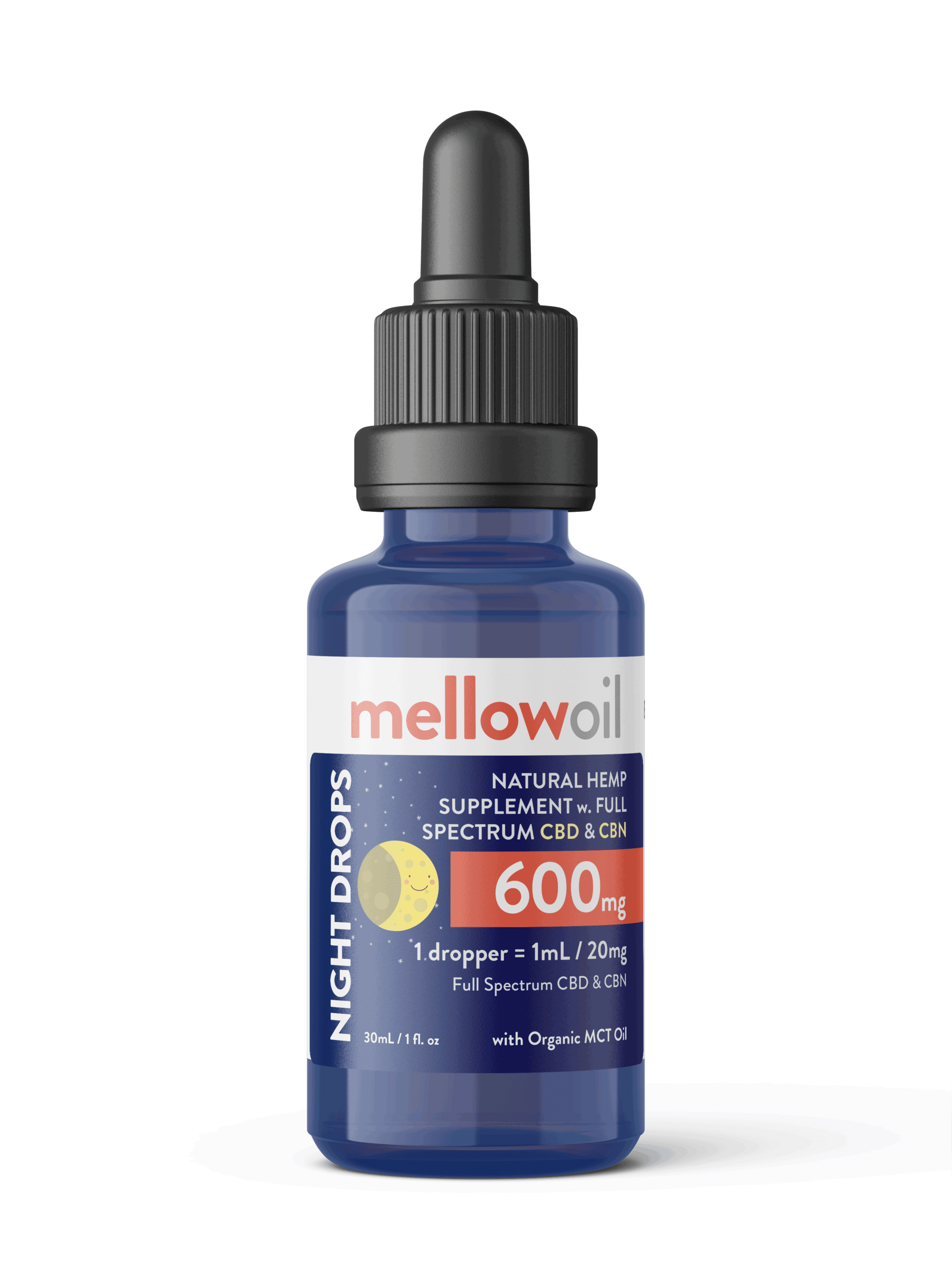
Mellow Oil NIGHT Drops with 1200mg of Full Spectrum CBD and CBN – Cannabinol / 40mg of Cannabinoids per mL
★★★★★★7
$79.99 CAD
Peer-reviewed evidence on CBD and CBN for sleep, including dosage guidance, safety data, and practical use for Canadian adults dealing with insomnia or sleep disturbance.

Roughly one in three Canadian adults reports insufficient sleep, and one in four meets criteria for insomnia disorder at some point in their life, according to Statistics Canada survey data. Interest in cannabidiol (CBD) as a natural sleep support has grown quickly in parallel, and the peer-reviewed literature has started catching up. This guide summarizes what the best available research actually shows — not marketing claims — and translates it into practical guidance.
Your endocannabinoid system (ECS) is a widespread network of receptors (CB1 and CB2), endogenous cannabinoids (anandamide and 2-AG), and the enzymes that produce and break them down. It plays a direct role in regulating your sleep–wake cycle. CB1 receptors — concentrated in the brain and nervous system — help modulate circadian rhythm, the body's internal clock that governs when you feel sleepy and when you wake [Murillo-Rodríguez et al., 2008].
A 2012 review in Pharmacology, Biochemistry and Behavior described the ECS as a "sleep-regulating system" with endocannabinoid tone that rises and falls across the circadian cycle [Prospéro-García et al., 2016]. Disruption of this tone — through chronic stress, inflammation, or simply aging — is one hypothesized mechanism behind age-related sleep fragmentation.
Unlike THC, which acts as a direct CB1 agonist, CBD is a negative allosteric modulator of CB1 and interacts with serotonin (5-HT1A), TRPV1, and adenosine receptors [Zhornitsky & Potvin, 2012]. This indirect, multi-target mechanism is why CBD doesn't produce a "high" and why its effects on sleep are more subtle — often described as reducing the obstacles to sleep rather than inducing sleep directly.
The evidence base for CBD and sleep is growing but still relatively small. Here are the most frequently cited studies, with links so you can read the primary sources yourself.
Shannon et al., 2019 (The Permanente Journal). A retrospective case series of 72 adults with anxiety and sleep complaints. Within the first month of CBD treatment, 66.7% reported improved sleep scores. Sleep improvements fluctuated more over time than anxiety improvements did [Shannon et al., 2019, PMC6326553]. Limitations: no placebo arm, open-label design, variable dosing.
Babson, Sottile & Morabito, 2017 (Current Psychiatry Reports). A systematic review of cannabis and cannabinoids for sleep. The authors concluded that preliminary research supports a potential role for CBD in improving sleep quality, particularly in people whose sleep disturbance is anxiety-driven [Babson et al., 2017].
Kuhathasan et al., 2019 (Experimental and Clinical Psychopharmacology). A scoping review focused specifically on medical cannabis for insomnia. Identified heterogeneous but generally favourable effects, with the strongest effect sizes in populations with pain-related sleep disturbance [Kuhathasan et al., 2019].
Linares et al., 2018 (Frontiers in Pharmacology). A randomized, placebo-controlled study of 27 healthy adults given 300 mg CBD. Did not find a significant effect on polysomnography-measured sleep architecture in the short term [Linares et al., 2018]. This is worth noting — acute, single-dose CBD in healthy adults without sleep complaints does not appear to change sleep structure.
Chagas et al., 2014 (Journal of Clinical Pharmacy and Therapeutics). A case series of four Parkinson's patients with REM sleep behaviour disorder. CBD reduced symptom frequency in all four [Chagas et al., 2014]. A small study, but one of the few specifically on sleep pathology.
Taken together, the literature supports the clinical intuition that CBD helps sleep indirectly — through anxiety reduction, reduced physiological arousal, and pain modulation — more than it helps via a direct sedative effect. This matches the typical user experience.
CBD (cannabidiol) works primarily by reducing the anxiety and physiological arousal that keep many people awake. It doesn't make you directly sleepy — it removes the obstacles to sleep. Expect gradual improvement over 2–4 weeks of consistent use, not a fast-acting hypnotic effect.
CBN (cannabinol) is a mildly sedating cannabinoid that forms naturally as tetrahydrocannabinol (THC) oxidizes over time. It has weak affinity for CB1 and CB2 and has been studied far less than CBD, but user reports and preliminary data suggest a more direct sedating effect [Corroon, 2021, Cannabis and Cannabinoid Research]. CBN is often paired with CBD in sleep products — including our Night Drops formulation — because the two have complementary mechanisms.
Note that most consumer "CBN for sleep" research remains preliminary. Human clinical trials of CBN in isolation are sparse. Claims of strongly sedating effects should be read with appropriate skepticism until larger placebo-controlled studies are completed.
The Shannon study used a median dose of approximately 25 mg per day for sleep, with some participants scaling up to 175 mg. Most published dose-response work suggests a biphasic pattern: low doses can promote alertness, higher evening doses promote sedation [Zhornitsky & Potvin, 2012].
Timing: Take 30–60 minutes before bed. Sublingual absorption (CBD oil held under the tongue for 60–90 seconds) reaches peak plasma levels in roughly 1–2 hours; swallowed capsules take longer due to first-pass liver metabolism.
Starting dose: Most adults start with 25–50 mg in the evening. Because CBD's effects on sleep can be dose-dependent, some find that a higher evening dose (50–75 mg) works better than a lower one. Titrate up gradually over 2–3 weeks rather than jumping doses.
Consistency: CBD's sleep benefits tend to improve over 2–4 weeks of consistent use as the ECS recalibrates. Don't draw conclusions from one night. If there's no perceptible benefit after 4 weeks at a reasonable evening dose (50–75 mg), CBD may not be the right intervention for your particular sleep issue.
Pair with sleep hygiene: CBD works best alongside good sleep hygiene — consistent bedtime, a cool dark room, reduced light and screen exposure in the hour before bed, and limiting caffeine after noon. CBD is not a replacement for behavioural sleep fundamentals.
CBD is generally well tolerated in doses used for sleep. The most commonly reported side effects are mild:
These match findings from the FDA-approved CBD medication Epidiolex, for which safety data at medical doses is extensive [Thiele et al., 2018, Lancet].
Drug interactions are the most important safety consideration. CBD is metabolized by the cytochrome P450 enzyme system — particularly CYP3A4 and CYP2C19 — and can slow the breakdown of many common medications [Brown & Winterstein, 2019, Journal of Clinical Medicine]. This includes:
If you take any prescription medication, talk to your pharmacist or physician before starting CBD. The interaction risk is real and well-documented.
CBD is not the right answer for every sleep complaint. Consider seeking medical evaluation rather than self-treating with CBD if:
Canadian guidelines recommend cognitive behavioural therapy for insomnia (CBT-I) as first-line treatment for chronic insomnia [Morin et al., 2023, Canadian Medical Association Journal]. CBD is best positioned as an adjunct, not a replacement, for evidence-based interventions.
For customers who've discussed CBD with their healthcare provider and want to try it for sleep support:
Browse our full sleep-related product lineup or read our beginner's guide to CBD in Canada if you're new to hemp-derived wellness.
Medical disclaimer: This article summarizes peer-reviewed research for educational purposes. It is not medical advice and does not replace consultation with a healthcare provider. If you have a sleep disorder, drug interaction concerns, or take prescription medication, talk to your physician or pharmacist before starting CBD.
The information in this article is for educational purposes only and is not intended as medical advice. Always consult with a healthcare professional before starting any new supplement, including CBD products.
Sources & Further Reading
Oils and Tinctures
Oils and Tinctures
Oils and Tinctures
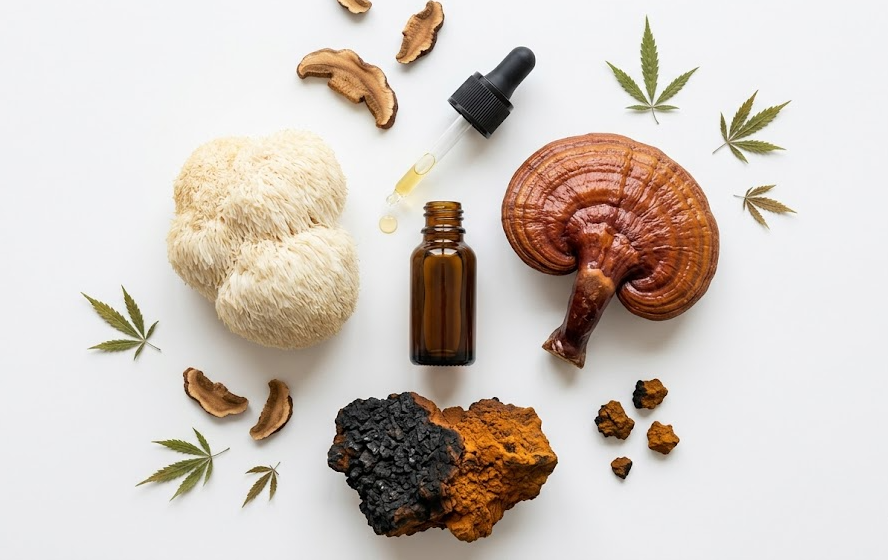
Functional mushrooms and CBD have both surged in popularity — and for good reason. Learn how Lion's Mane, Reishi, and Chaga work, and why pairing them with CBD makes sense.
Weight-based CBD dosing chart for Canadians. Find your starting dose in mg based on body weight, use case, and product type — plus a free calculator to personalize it further.

CBD isn't a weight loss drug — but there's real science behind how it may support better sleep, lower stress, and a healthier metabolism. An honest look at the evidence.