
Oils and Tinctures
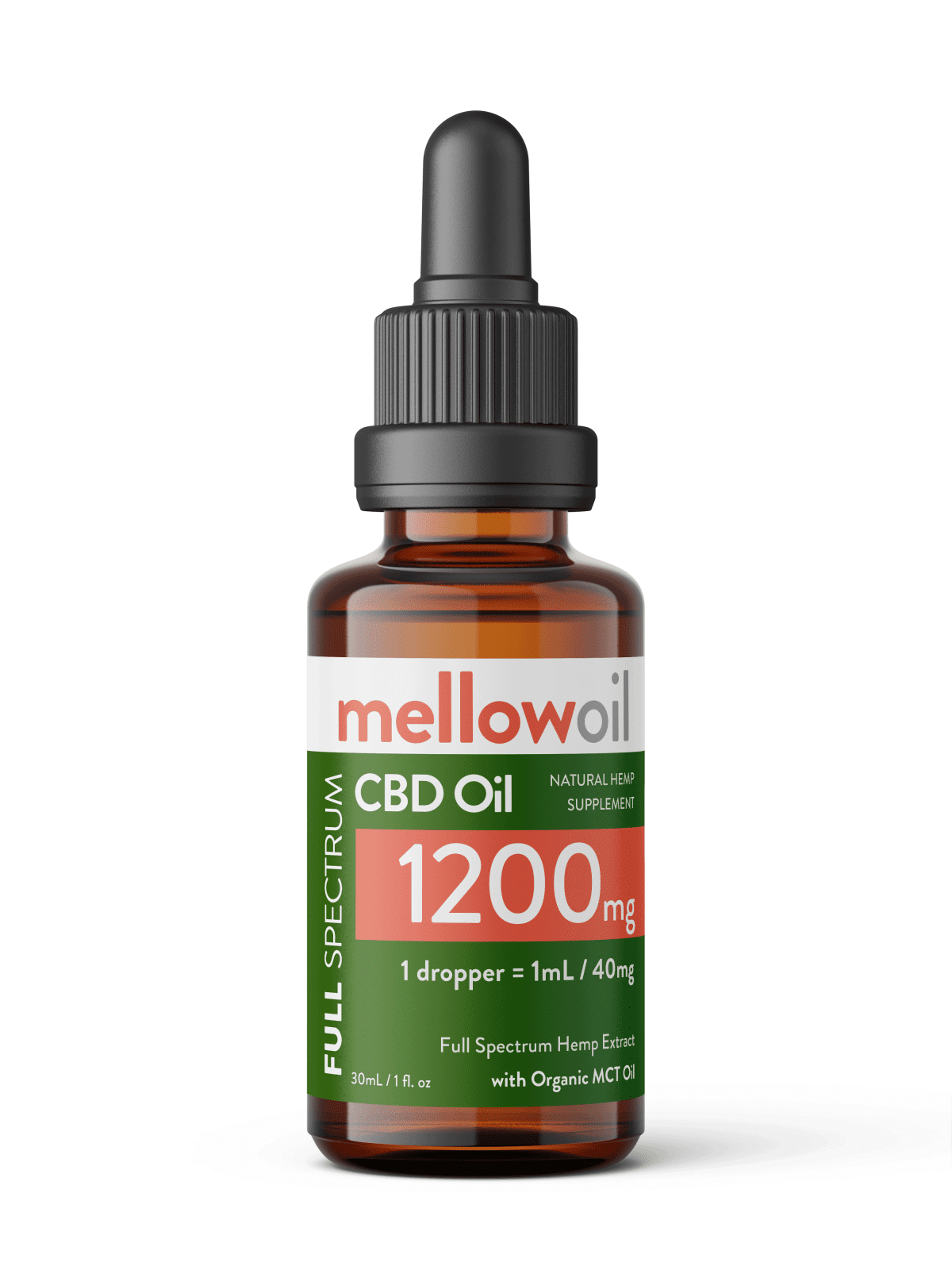
Mellow Oil Full Spectrum CBD Oil 30ml with 1200mg Cannabidiol / 40mg CBD per mL
★★★★★★81
$52.00 CAD
Roughly one in four boomers in Quebec reports persistent ringing or buzzing in their ears. Can CBD help? Review the evidence, BuyMellow offers the cheapest and best quality CBD in Canada. Gummies, top

Can CBD help Canadians suffering from tinnitus? Tinnitus is a very distracting and unpleasant condition — and it doesn’t just fade away with age. Roughly one in four boomers in Quebec reports persistent ringing or buzzing in their ears. CBD is being adopted for its many benefits, but is there any evidence it could ease tinnitus symptoms? The relief some people hope for may not line up with the latest scientific findings. CBD is great for inflammation, stress, and tension — but will it work for ringing in the ears?
TL;DR: Current research doesn’t confirm that CBD relieves tinnitus directly, and some animal studies suggest cannabinoids could even worsen neural hyperactivity in auditory pathways. That said, CBD may help with related issues like stress and sleep. If you’re considering it, start low, track your symptoms, and check with your doctor first.
| Takeaway | Explanation |
|---|---|
| Tinnitus is a common auditory condition | Tinnitus affects many people, especially older individuals, leading to ongoing challenges and reduced quality of life. |
| CBD’s effectiveness for tinnitus remains unclear | Current research doesn’t provide conclusive evidence that CBD relieves tinnitus symptoms. Caution is advised. |
| Consult healthcare professionals before use | Talking to a healthcare provider is important to ensure safety and get personalised recommendations. |
| Understand legal regulations in Quebec | Know the local rules around CBD products, including purchasing restrictions and age limits. |
| Start CBD use carefully and monitor effects | Begin with low doses and track symptoms and responses to get the most out of what you’re trying. |
Tinnitus is an auditory condition affecting millions, particularly those in the boomer generation. Loud concerts in the 1970s, perhaps? This persistent sound perception can genuinely affect quality of life. It’s very frustrating. Strangely, tinnitus is sometimes listed as a symptom of long-term use of Viagra.
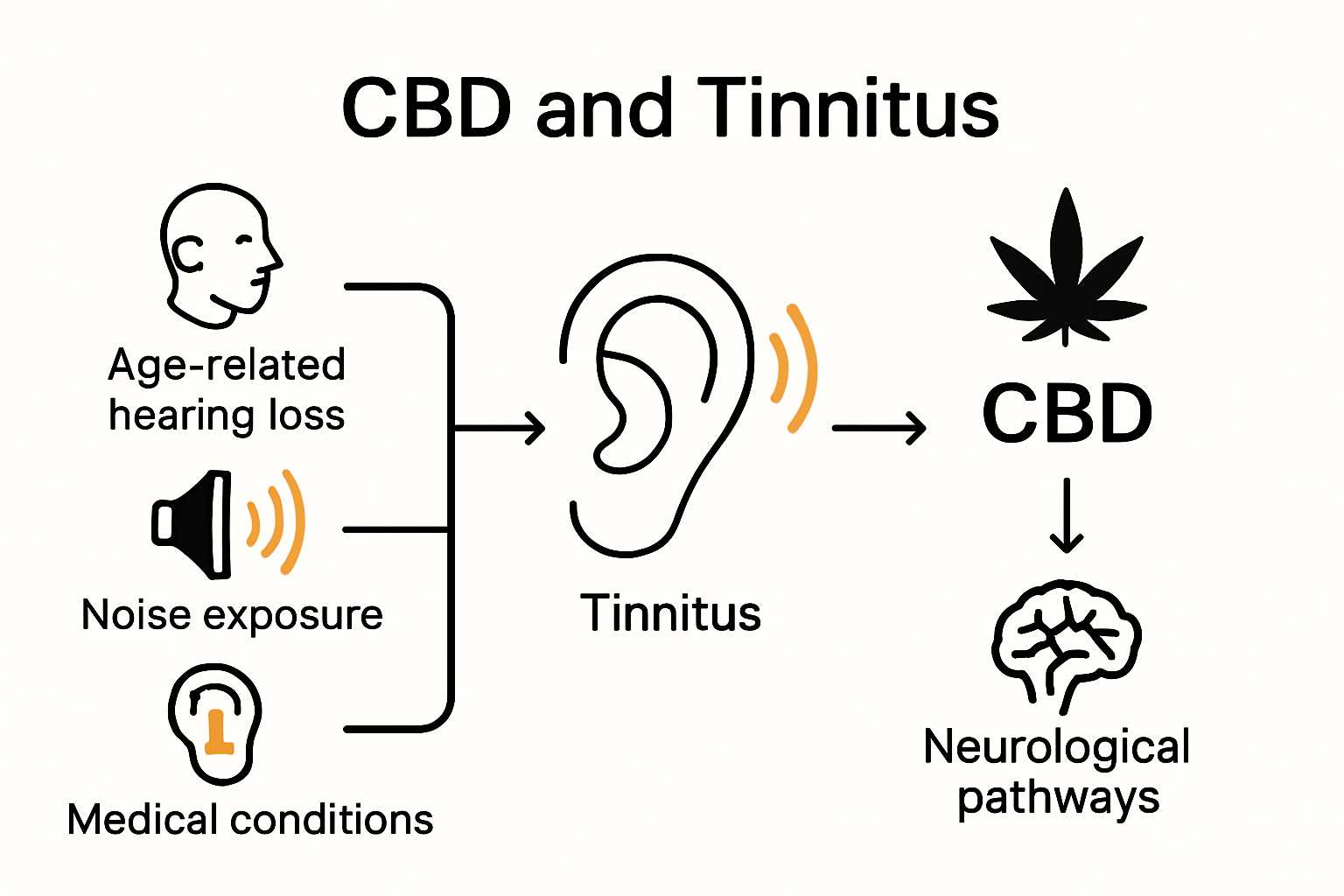
Tinnitus isn’t a disease — it’s a symptom characterised by hearing sounds that don’t come from external sources. According to the National Institute on Deafness and Other Communication Disorders, these sounds can show up as ringing, buzzing, whistling, or hissing in one or both ears. The experience is deeply personal and can range from mild background noise to an overwhelming auditory disturbance that significantly disrupts daily life.
Sound occurs without any actual external noise — that’s what makes tinnitus a unique neurological experience. For many boomers, it develops gradually, often tied to age-related hearing changes or cumulative noise exposure over the years.
Research from Mayo Clinic points to multiple potential triggers. Age-related hearing loss is the most common one, with inner ear hair cells naturally breaking down over time. These tiny cells, which translate sound waves into electrical signals, become less responsive as people age.
Other significant causes include:
Tinnitus goes well beyond sound perception. The continuous auditory disturbance can cause real psychological strain — increased stress, sleep disruption, and cognitive fatigue. Many people report trouble with concentration, emotional regulation, and overall mental well-being.
Understanding these mechanisms helps boomers recognise that tinnitus isn’t just an auditory issue. It’s a complex condition that needs comprehensive management and, in some cases, targeted therapeutic support.
Making sense of the potential connection between CBD and tinnitus takes a careful look at what current science actually says. While many boomers are looking for alternative relief strategies, researchers are still working out the complex interactions between cannabinoids and auditory processing.
Research published in Frontiers in Neurology highlights that direct clinical evidence for CBD’s effect on tinnitus remains limited. The studies suggest that while cannabinoids may interact with the central nervous system, conclusive proof of symptom improvement is still pending.
Interestingly, The Hearing Journal notes that some animal studies have produced conflicting results. Some research even suggests that cannabinoids could potentially increase neural hyperactivity in auditory pathways — which could actually make tinnitus symptoms worse.
CBD’s interaction with the endocannabinoid system does open up some interesting possibilities. A review in Trends in Hearing notes that while cannabinoids may influence neurological processes, the specific mechanisms related to tinnitus are still poorly understood.
Potential areas of neurological interaction include:
Boomers considering CBD for tinnitus should approach it with cautious optimism. While our overview of CBD and sleep covers related neurological benefits, tinnitus-specific research is still in early stages.
Talking to a healthcare professional is important here. Each person’s experience with tinnitus is different, and what works for one person may not work the same way for another. Research continues to explore how CBD and complex neurological conditions like tinnitus interact.
For boomers in Quebec thinking about CBD as a possible approach to managing tinnitus, understanding the legal framework and safety considerations matters. The regulatory environment requires some attention to both provincial and federal guidelines.
Health Canada’s consumer information stresses the importance of understanding potential effects and interactions. While CBD is non-intoxicating, it can still affect brain function and potentially interact with other medications.
Boomers should keep these safety recommendations in mind:
While CBD shows potential for various health applications, Quebec’s regulatory framework is designed to protect consumers. The provincial approach puts safety and controlled distribution first, so staying informed is part of responsible use.
Boomers interested in CBD for tinnitus should stay up to date on evolving research and regulatory guidelines. The legal space continues to develop as scientific investigations explore potential therapeutic applications.
Responsible, informed use comes first. Quebec’s regulations aim to protect consumers while keeping access to potentially useful cannabis-derived products open.

Using CBD well takes some thought, especially for boomers looking at potential relief from tinnitus symptoms. Knowing how to approach CBD consumption can help you make informed decisions about your wellness routine.
Research published in Frontiers in Neurology stresses the importance of cautious, strategic CBD use. For boomers considering CBD, a methodical and informed approach is essential.
The table below outlines recommended steps for boomers in Quebec to start their CBD journey for tinnitus.
| Step | Action | Key Advice |
|---|---|---|
| 1. Consultation | Speak with healthcare professionals | Make sure advice fits your personal health profile |
| 2. Start low and slow | Use a minimal initial dose of CBD | Adjust gradually based on response |
| 3. Choose quality | Select high-quality, third-party tested products | Check concentration and extraction method |
| 4. Track progress | Keep a symptom and dosage journal | Note symptom intensity and any side effects |
| 5. Adjust as needed | Refine dosage and product choice | Keep communicating with your healthcare provider |
Key initial strategies include:
Picking the right CBD product involves several considerations. Product type, concentration, and intended use all play a role in determining effectiveness. Full-spectrum CBD products may offer broader potential benefits compared to isolated cannabinoid extracts.
Things to consider when choosing:
Your response to CBD can vary a lot compared to someone else’s. Keeping a detailed journal to track symptoms, dosage, and potential side effects gives you useful information for adjusting your approach. This tends to make a real difference in finding what actually works for you.
Recommended things to track:
Be patient and realistic about what CBD can do here. While it shows genuine promise for various health applications, individual results can differ dramatically. Staying in touch with your healthcare provider and being willing to adjust your strategy are the keys to getting the most out of CBD.
Bottom line: CBD isn’t a guaranteed solution for tinnitus, but it may be a useful complementary approach to managing some of the related symptoms. Keeping realistic expectations and a holistic approach to wellness is what matters most.
Tinnitus is characterised by hearing sounds — like ringing or buzzing — that aren’t present in the environment. Common causes include age-related hearing loss, noise exposure, earwax blockages, and certain medical conditions.
Current research suggests CBD may interact with the central nervous system, but there’s no conclusive evidence it relieves tinnitus symptoms. Some studies even suggest it could worsen things. Approach with caution and realistic expectations.
Look at product type (full-spectrum vs. isolate), concentration levels, third-party testing, and extraction methods. Full-spectrum products may offer broader benefits compared to isolates.
Talk to a healthcare professional first. Start with a low dosage, observe your body’s response, and keep a journal to track symptoms and any side effects for further adjustments.
Finding calm when tinnitus disrupts your daily life isn’t easy. Many boomers in Quebec deal with ongoing ringing or buzzing in their ears and aren’t sure how to safely choose something that might actually help. After reading about how complex tinnitus is and the cautious optimism around CBD, you might be looking for a trustworthy source dedicated to your wellness in Canada.

Visit Buy Mellow today for premium CBD oils, extracts and topicals made for clarity and peace of mind. Check out our full-spectrum CBD overview to understand what might fit your needs. Take the next step in your tinnitus journey by reading real dosage advice tailored to boomers in Quebec. Choose a partner who understands your challenges and is committed to helping you find potential relief.
The information in this article is for educational purposes only and is not intended as medical advice. Always consult with a healthcare professional before starting any new supplement, including CBD products.
Sources & Further Reading
Oils and Tinctures

Oils and Tinctures
Oils and Tinctures

CBD, CBN, or melatonin for sleep in Canada? Compare onset, duration, dependency risk, and daily suitability. Research-backed guide with dosage starting points.
CBN isolate is a pure, THC-free cannabinoid extract gaining traction in Canada for sleep support. Learn what it is, how it differs from CBD, and what to look for when buying.

Find the cheapest CBD oil in Canada without sacrificing quality. 2026 price comparison, value tips, and lab-tested picks from 2 CAD.