
Topicals
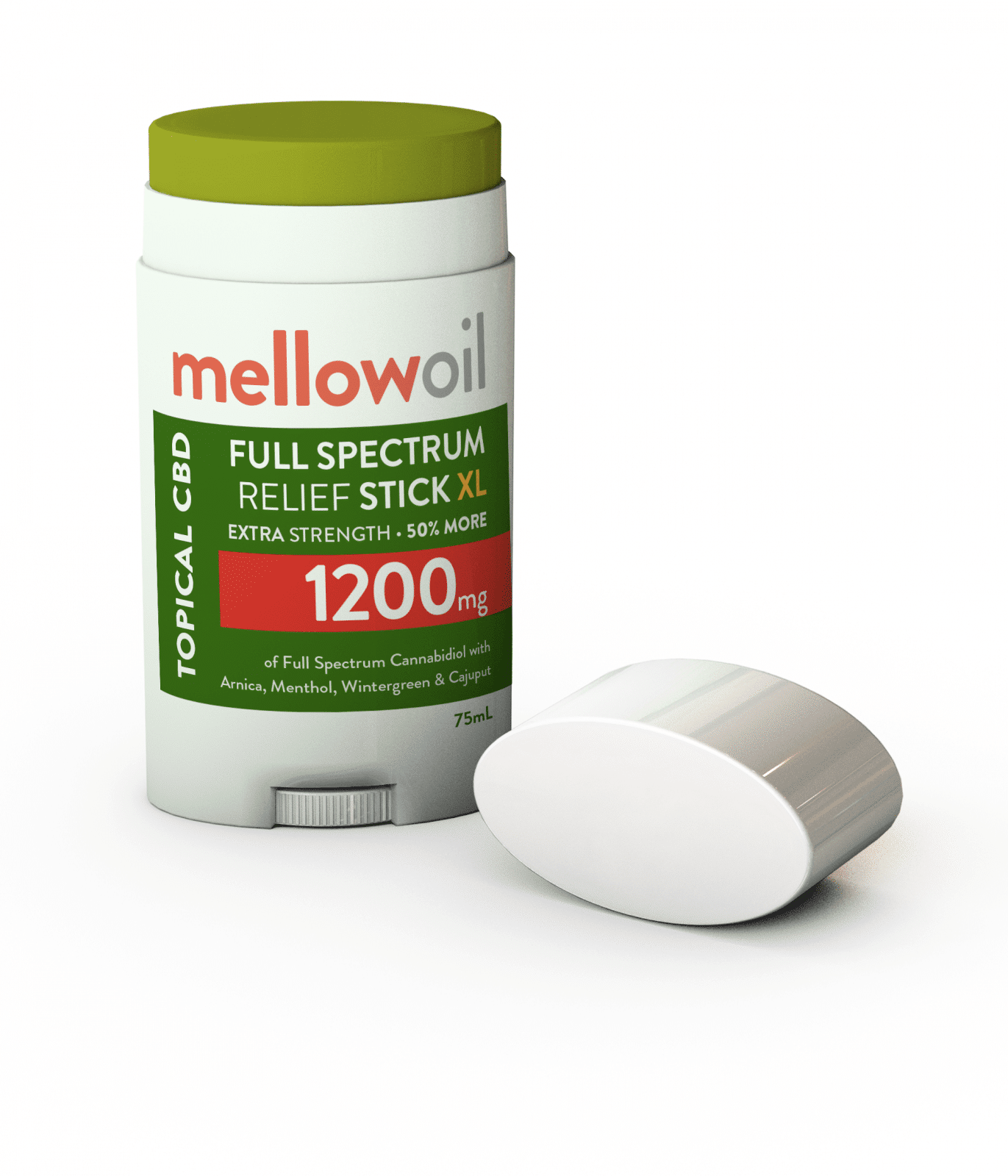
Mellow Oil Topical Full Spectrum EXTRA Strength XL (extra large) CBD Relief Stick 75mL with 1200mg CBD
★★★★★110
$80.00 CAD
CBD has become a talking point for Canadians battling nerve pain, especially since up to 2.4 million people in Canada are affected by neuropathy. BuyMellow, the #1 online vendor of CBD in Canada can h

CBD has become a talking point for Canadians dealing with nerve pain, especially since up to 2.4 million people in Canada are affected by neuropathy. Many assume relief must come from harsh drugs or resigning to constant discomfort. Yet new research suggests that CBD could change how we think about managing nerve pain, giving fresh hope where frustration once ruled.
TL;DR: CBD may ease neuropathic pain by interacting with the endocannabinoid system to reduce inflammation and modulate pain signals. Short-term use of 20–200 mg daily is generally considered safe for healthy adults in Canada. Always start low, monitor your response, and consult a healthcare professional before combining CBD with other medications.
| Takeaway | Explanation |
|---|---|
| Neuropathy requires comprehensive understanding. | Neuropathy affects many people and managing it effectively means a holistic approach tailored to individual needs. |
| CBD may ease nerve pain. | Research suggests CBD interacts with the endocannabinoid system, potentially reducing pain and inflammation associated with neuropathy. |
| Consult healthcare professionals before use. | Expert guidance ensures correct usage, dosage, and addresses any potential interactions with existing medications. |
| Quality matters in CBD products. | Choose solid CBD from reputable sources, with independent testing and transparency regarding ingredient sourcing and manufacturing. |
| Individual responses to CBD vary. | Each person’s reaction to CBD can differ significantly; starting with low doses helps monitor effectiveness and side effects. |
Neuropathy is a complex neurological condition that affects millions of people worldwide, creating significant disruptions in daily functioning and quality of life. While often misunderstood, this nerve disorder calls for a thorough understanding and a strategic approach to management.
Peripheral neuropathy occurs when nerves outside the brain and spinal cord sustain damage, leading to a cascade of uncomfortable and potentially debilitating symptoms. National Institute of Neurological Disorders and Stroke highlights that this condition can result from multiple underlying causes, including diabetes, infections, hereditary disorders, and environmental toxin exposure.
The nervous system functions like an intricate communication network, with peripheral nerves transmitting critical signals between the central nervous system and various body parts. When these nerves become damaged, the communication breaks down, resulting in a range of symptoms that can dramatically affect an individual’s mobility and sensory experiences.
Neuropathic symptoms show up in diverse and often unpredictable ways. Individuals might experience:
Mayo Clinic emphasizes that these symptoms can range from mild inconvenience to severe impairment, significantly affecting an individual’s capacity to perform routine activities.
The physiological implications go beyond immediate physical sensations. Chronic neuropathy can lead to reduced quality of life, psychological stress, and potential long-term complications if left unaddressed. The unpredictable nature of nerve damage means that symptoms can progress, making early recognition and intervention important. Sound familiar?
To help readers review the main symptoms, causes, and implications of neuropathy, here’s a concise summary table for quick reference.
| Aspect | Details |
|---|---|
| Common Symptoms | Tingling, burning, numbness, muscle weakness, sharp/electric pain |
| Potential Causes | Diabetes, infection, hereditary disorders, toxins |
| Physiological Impacts | Disrupted nerve signalling, impaired mobility, sensory disturbances |
| Quality of Life Effects | Reduced capacity, psychological stress, potential for long-term issues |
| Importance of Early Action | Early recognition/intervention important for better outcomes |
While neuropathy presents substantial challenges, emerging therapeutic approaches offer renewed hope. Traditional treatments have primarily focused on symptom management, but innovative strategies are expanding the potential for nerve health support.
Understanding the complexity of neuropathy means taking a holistic approach that considers individual variations in symptoms, underlying causes, and potential intervention strategies. Each person’s experience with neuropathy is unique, which means personalized assessment and treatment protocols are essential.
The goal of managing neuropathy isn’t finding a single universal solution — it’s developing comprehensive, adaptive strategies that address individual needs and provide meaningful relief. By combining medical expertise, emerging research, and patient-centred approaches, individuals can work through the challenges of neuropathy with increased confidence and the potential for improved nerve health.
Cannabidiol (CBD) has emerged as a promising therapeutic option for individuals dealing with neuropathic pain, offering potential relief through unique interactions with the body’s neurological systems. CBD’s complex mechanisms suggest a multi-angle approach to addressing nerve pain challenges.
Research indicates that CBD interacts with the body’s endocannabinoid system in ways that may help manage nerve pain. Current Neuropharmacology highlights that CBD shows potential in reducing neuropathic pain by modulating pain signaling pathways and providing anti-inflammatory effects.
The endocannabinoid system plays a key role in pain perception, with CBD potentially influencing neural receptors responsible for pain transmission. By interacting with CB1 and CB2 receptors, CBD may help interrupt pain signals and reduce the inflammatory responses associated with nerve damage.
Chronic nerve pain often involves persistent inflammation, which can make nerve sensitivity and discomfort worse. Cannabis and Cannabinoid Research suggests that CBD’s anti-inflammatory properties could be useful in managing neuropathic pain conditions.
Key potential benefits include:
People experiencing neuropathic pain may find practical nerve pain management options through targeted CBD interventions that address multiple aspects of nerve discomfort. From what we’ve seen, a consistent daily routine tends to produce better results than occasional use.
Journal of Cannabis Research provides compelling insights into CBD’s potential for chronic pain management. The research suggests that CBD may offer analgesic effects by interacting with the endocannabinoid system and modulating neural pain signaling.
While research continues to evolve, preliminary studies show promising signs that CBD could provide a complementary approach to traditional nerve pain management strategies. The nuanced interactions between CBD and the nervous system suggest a potential pathway for individuals seeking alternative approaches to nerve pain relief.
It’s essential to recognize that individual experiences with CBD can vary, and consulting healthcare professionals remains important when developing comprehensive pain management strategies. The potential of CBD represents an exciting area in understanding and addressing the complex challenges of neuropathic pain.
Working with CBD for neuropathy means getting a solid grasp on safety considerations, potential side effects, and the specific legal framework within Canada. Individuals seeking relief should approach CBD use with informed caution and professional guidance.
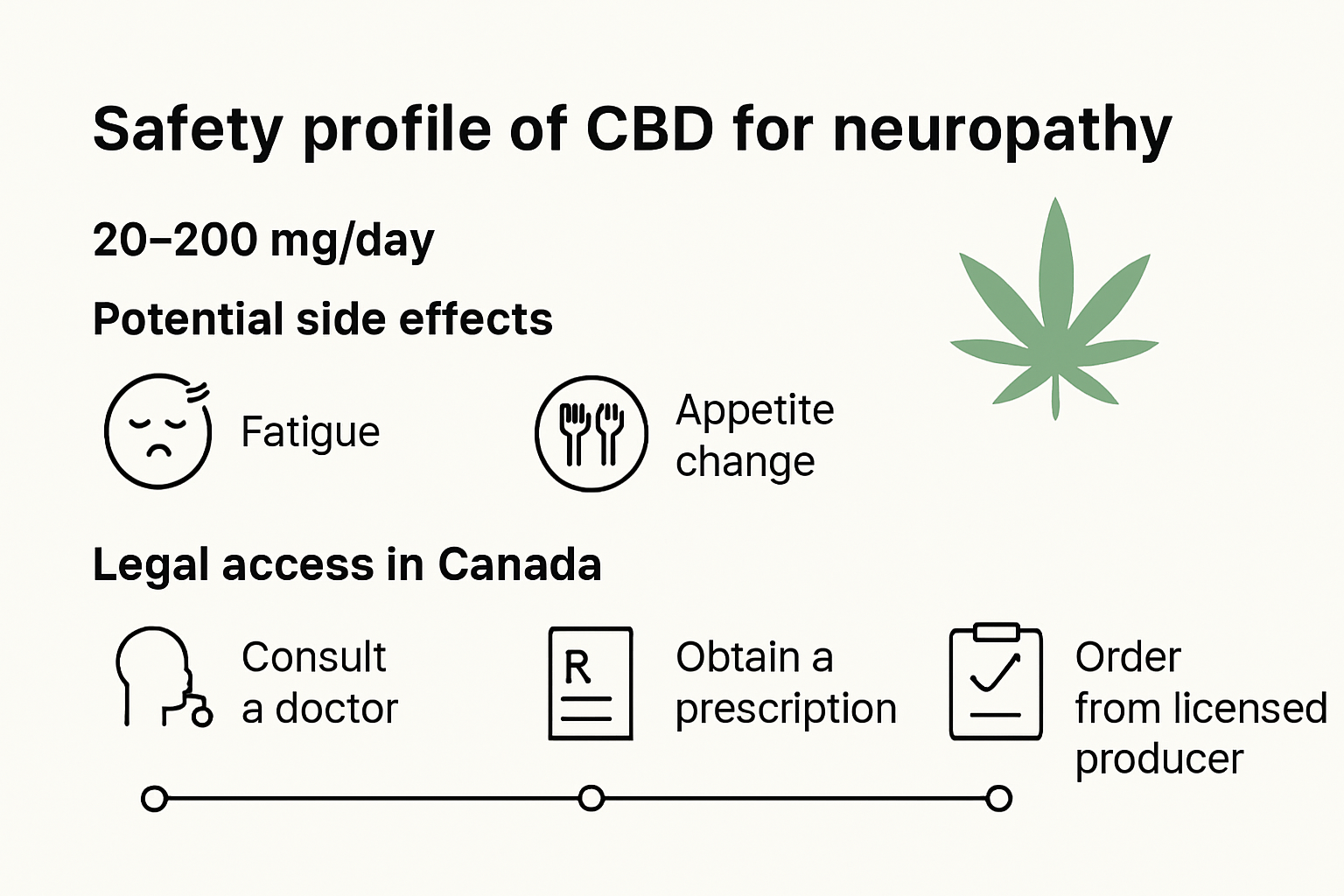
Health Canada’s Science Advisory Committee provides key insights into CBD safety. Their research indicates that short-term use between 20 mg and 200 mg per day is generally considered safe for healthy adults. However, this recommendation comes with important caveats about individual variability and potential interactions.
Patients considering CBD for neuropathy should be aware that individual responses can vary significantly. Full spectrum CBD options offer nuanced approaches that may provide more comprehensive therapeutic potential.
While CBD shows promise, potential side effects need to be carefully evaluated. Research highlights several considerations:
A clinical study published in the medical literature showed that transdermal CBD application for peripheral neuropathy produced significant pain reduction with minimal adverse events. This suggests a good safety profile when used appropriately.
Health Canada’s guidelines provide a clear framework for medical cannabis use. While CBD is legal, medical authorization remains important for therapeutic applications. Healthcare professionals play a key role in determining appropriate usage, dosage, and potential interactions.
Key legal considerations include:
Individuals interested in exploring CBD for neuropathy should prioritize professional medical advice. Managing nerve pain is complex and calls for a personalized, carefully considered approach that balances potential benefits with individual health requirements.
The evolving research field continues to offer more nuanced understanding of CBD’s potential. CBD market developments in Canada reflect an increasingly thoughtful approach to therapeutic cannabinoid use, with an emphasis on patient safety and informed decision-making.
Managing neuropathic pain with CBD takes patience, professional guidance, and a willingness to understand your own physiological response. While promising, CBD should be viewed as part of a broader pain management strategy — not a standalone fix.
Selecting the right CBD product for neuropathy requires careful consideration and informed decision-making, especially for individuals in Quebec looking for effective nerve pain management. Understanding the nuances of CBD products can significantly affect therapeutic outcomes.
Medical News Today emphasizes the importance of selecting solid CBD products, noting that unregulated offerings may contain contaminants or inaccurate cannabinoid levels. Consumers should prioritize products from reputable sources with transparent manufacturing processes.
Key quality indicators include:
Our CBD and CBG guides provide additional insights into selecting premium products that meet rigorous quality standards.
Clinical research shows that different CBD delivery methods can offer varying effectiveness for neuropathic pain. Transdermal applications, oral tinctures, and topical treatments each present unique advantages for nerve pain management. How do you choose? It largely depends on whether you need localized or systemic relief.
To help readers compare different CBD product types and their delivery methods for neuropathic pain, here’s a summary table outlining key features and considerations for each.
| Product Type | Typical Usage | Key Advantages | Considerations |
|---|---|---|---|
| Transdermal (Patch/Cream) | Applied directly to skin over painful area | Targeted relief, minimal systemic effects | Absorption can vary |
| Oral Tincture | Taken under the tongue or ingested | Systemic relief, dosage flexibility | Slower onset, taste may vary |
| Topical (Balm/Lotion) | Applied externally on affected region | Localised action, easy application | May need frequent reapplication |
| 11 THCCBD Extract | Ingested as oil or capsule | Sustained nerve pain relief (per studies) | May have psychoactive effects |
A randomized study found that a THCCBD (11) extract provided sustained pain relief for peripheral neuropathic pain patients over 52 weeks, highlighting the potential of carefully formulated cannabinoid products.
Individuals in Quebec working through neuropathy with CBD should prioritize professional medical guidance. CBD market developments in Canada reflect an increasingly thoughtful approach to therapeutic cannabinoid use, emphasizing personalized treatment strategies.
Recommended steps for informed product selection:
Managing neuropathic pain through CBD takes patience, research, and a clear-eyed view of your own physiological responses. While promising, CBD should be approached as a complementary strategy within a broader pain management plan.
By combining careful product selection, professional guidance, and a patient-centered approach, individuals in Quebec can find their way through the CBD product space with confidence and the potential for meaningful nerve pain relief.

Neuropathy is a complex neurological condition affecting the peripheral nerves, causing symptoms such as tingling, burning sensations, numbness, muscle weakness, and sharp or electric-like pain in extremities. These symptoms can significantly disrupt daily functioning and quality of life.
CBD may interact with the body’s endocannabinoid system, potentially reducing nerve pain by modulating pain signalling pathways and exhibiting anti-inflammatory effects. This can help ease discomfort associated with nerve damage and promote overall nerve health.
When selecting a CBD product, consider factors such as product quality (third-party lab testing, sourcing), delivery methods (transdermal, oral tinctures, topicals), and your individual health needs. It’s essential to consult with healthcare professionals for personalized advice.
While CBD is generally considered safe, some individuals may experience side effects such as temporary cognitive effects, fatigue, or changes in appetite. It’s important to monitor individual responses and consult healthcare professionals, especially if taking other medications.
Living with nerve pain can feel overwhelming when constant tingling or burning becomes your daily reality. Neuropathy can deeply affect your comfort and independence, and we understand the challenge of finding targeted, gentle yet effective support. Many Canadians are looking for options that go beyond temporary fixes and want therapeutic approaches that work with the body’s natural responses. At BuyMellow, our sole focus is premium CBD oils, extracts, and topicals developed specifically for the Canadian market. Our products are crafted to help ease persistent nerve pain and address symptoms like disrupted mobility and sensitivity. Explore our broad selection on the BuyMellow homepage and find trusted full spectrum CBD options that align with the latest clinical research discussed above.

Take proactive steps towards easing neuropathy pain today. Visit buymellow.com to find a solution that fits your personal journey. Start feeling better sooner with Canadian integrity, quality assurances, and careful attention to your nerve health goals.
The information in this article is for educational purposes only and is not intended as medical advice. Always consult with a healthcare professional before starting any new supplement, including CBD products.
Sources & Further Reading
Topicals
Oils and Tinctures
Topicals

CBD, CBN, or melatonin for sleep in Canada? Compare onset, duration, dependency risk, and daily suitability. Research-backed guide with dosage starting points.
CBN isolate is a pure, THC-free cannabinoid extract gaining traction in Canada for sleep support. Learn what it is, how it differs from CBD, and what to look for when buying.

Find the cheapest CBD oil in Canada without sacrificing quality. 2026 price comparison, value tips, and lab-tested picks from 2 CAD.