
Oils and Tinctures
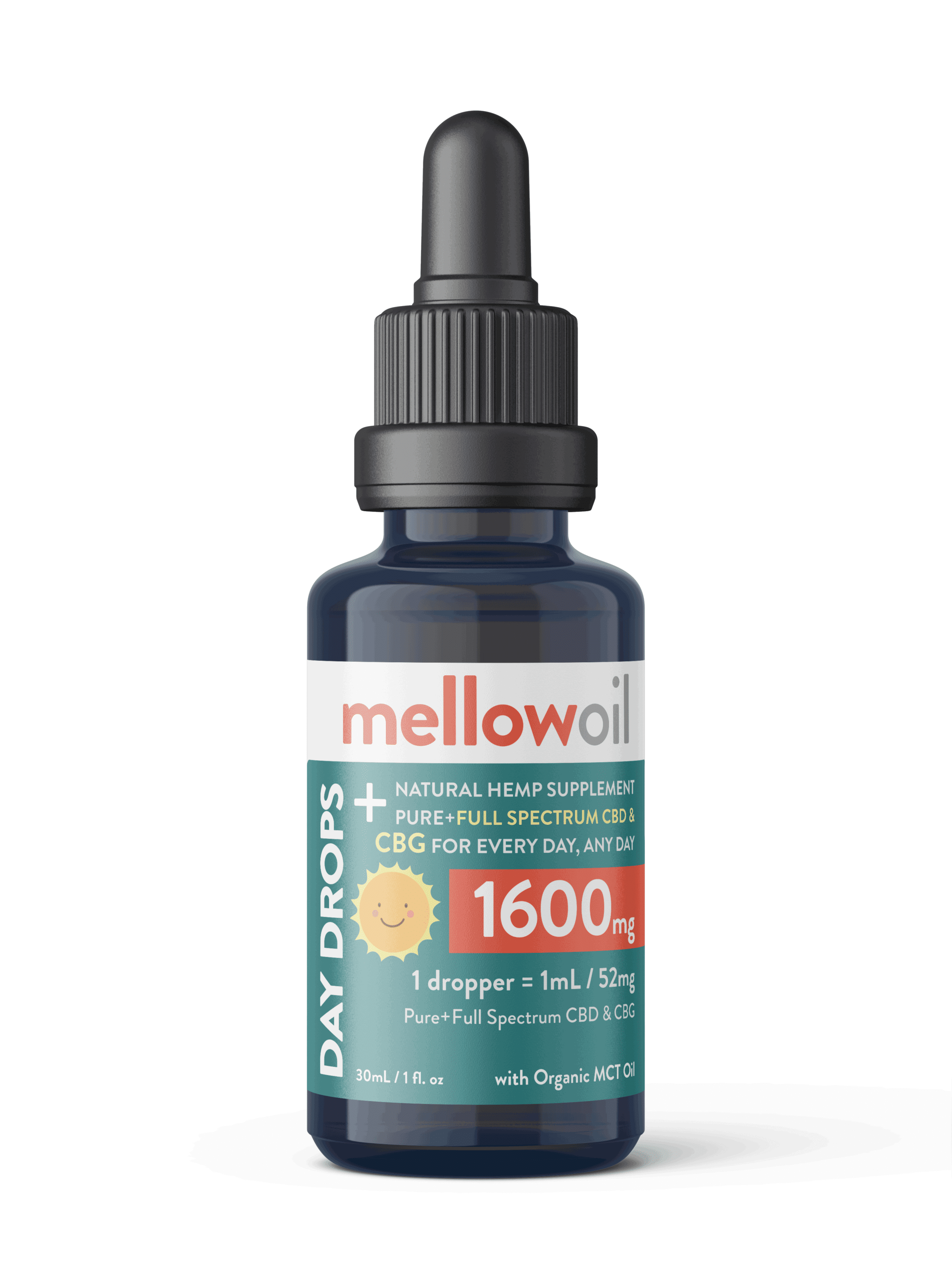
Mellow Oil DAY DROPS PLUS 1600mg with Pure + Full Spectrum CBD and CBG / 53mg of Cannabinoids per mL
★★★★★★4
$80.00 CAD
CBG and CBD are both non-psychoactive cannabinoids, but they work differently. Here's how they compare for inflammation, anxiety, and general wellness — and which makes more sense for you.

CBG and CBD are both non-psychoactive cannabinoids derived from hemp — and they come from the same source. Every cannabinoid in the hemp plant starts as CBGA (cannabigerolic acid), which breaks down into CBDA, THCA, CBCA, and others as the plant matures. This is why CBG is often called the "mother of all cannabinoids." CBD literally originates from CBG.
So are they the same? No — and that's where it gets interesting.
Cannabigerol (CBG) was first isolated in 1964 by Israeli scientist Dr. Raphael Mechoulam. Like CBD, it's non-psychoactive — no intoxicating effects. But its molecular structure is different from CBD, which means it interacts with the endocannabinoid system differently.
CBG is found in much smaller quantities in mature cannabis plants — typically under 1% of the plant's cannabinoid content, compared to CBD which can reach 20–25%. This scarcity makes CBG harder to extract and historically more expensive to produce.
Key properties the research points to:
Cannabidiol (CBD) is the most studied cannabinoid after THC. It's non-addictive, non-psychoactive, and has the widest research base of any cannabinoid. CBD interacts with the endocannabinoid system primarily by influencing CB1 and CB2 receptor activity indirectly, and by binding to serotonin (5-HT1A) and other non-cannabinoid receptors.
The most studied areas: anxiety, sleep, inflammation, and seizure activity (where it has the strongest clinical evidence, with an FDA-approved pharmaceutical formulation for two rare epilepsy syndromes).
| CBG | CBD | |
|---|---|---|
| Psychoactive | No | No |
| Origin | Precursor to all cannabinoids | Derived from CBGA |
| Availability | Limited — under 1% of plant | High — 20%+ of plant |
| Anti-inflammatory | Strong preclinical data | Strong preclinical + some human data |
| Anxiety support | Promising (early research) | Well-documented across human studies |
| Nausea | Blocks CBD's anti-nausea mechanism | May reduce nausea via 5-HT1A |
| Research volume | Limited — newer area | Extensive |
| Cost | Higher | Lower |
One notable distinction: CBD acts as an agonist at the 5-HT1A receptor, which is part of how it may reduce nausea. CBG acts as an antagonist at that same receptor — blocking the effect. This is one reason why CBG and CBD aren't simply interchangeable.
Not in a straightforward way. The more accurate framing: they're different tools for different purposes.
CBG may have stronger activity against certain types of inflammation than CBD alone. Early research also points toward focus and mood support as a more distinct CBG characteristic. CBD, meanwhile, has a much more established evidence base for anxiety, sleep, and pain — areas where it's been studied in human clinical trials.
For most people exploring cannabinoids for general wellness, CBD is the more well-supported starting point. For people who've used CBD and want to explore additional cannabinoid support — particularly for focus, mood, or inflammation — adding CBG is worth considering.
The most compelling argument for either isn't really "which is stronger" — it's that they work better together. The entourage effect suggests that cannabinoids in combination produce different (often enhanced) effects than when used individually. This is why full-spectrum oils remain the most popular format.
Browse CBG products available in Canada →
As with all cannabinoids, start with a lower dose and adjust from there. Speak with a healthcare professional if you're managing a specific condition or taking medications.
The information in this article is for educational purposes only and is not intended as medical advice. Always consult with a healthcare professional before starting any new supplement, including CBD products.
Sources & Further Reading
Oils and Tinctures
Oils and Tinctures
Oils and Tinctures
Weight-based CBD dosing chart for Canadians. Find your starting dose in mg based on body weight, use case, and product type — plus a free calculator to personalize it further.

CBD isn't a weight loss drug — but there's real science behind how it may support better sleep, lower stress, and a healthier metabolism. An honest look at the evidence.

CBD quiets a racing mind; CBN promotes physical drowsiness. Together, they offer a non-habit-forming natural sleep approach. Here's how they work, how to dose them, and what to look for in a product.